
Stucco Cracks on Brevard Homes: What to Patch Before Painting and What Needs Repair First
Hairline stucco cracks under about 1/16 inch can be filled, sealed and painted as part of a normal Brevard County exterior repaint. Cracks wider than that, cracks that step diagonally from window corners, and any area that sounds hollow when tapped need repair before paint — coating over them just hides the problem for a season.
· 6 min read · Pro Touch Painting
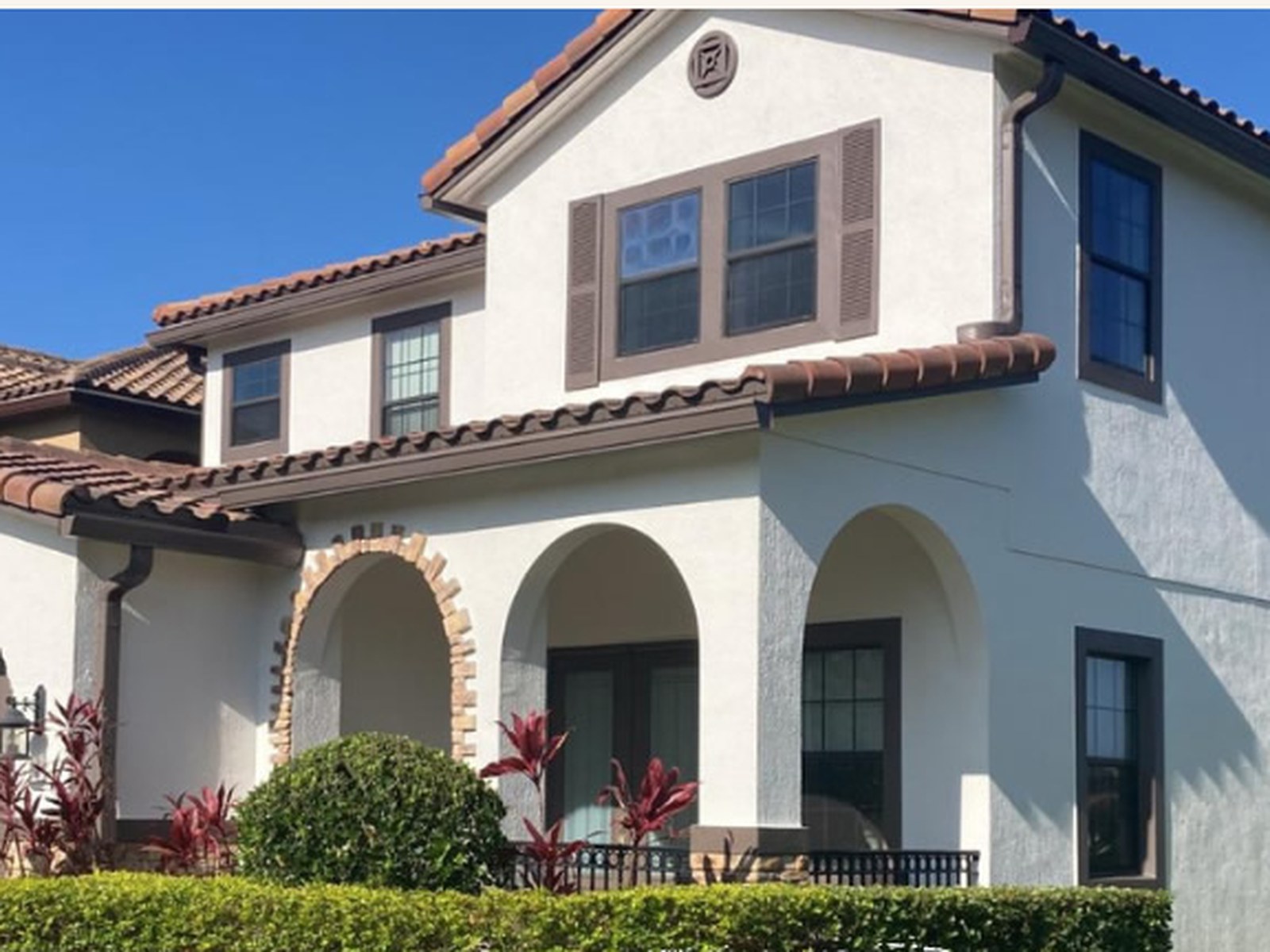
Why Brevard stucco cracks in the first place
Most Brevard homes are concrete block with a stucco skin, or frame with lath and stucco on the second story. Stucco is rigid and the building moves — thermal expansion in the Florida sun, settlement, and vibration all show up in the weakest line of the wall.
The common patterns are predictable: hairline map cracking across a large field, straight lines following block joints, and diagonal cracks running out of window and door corners where stress concentrates.
The three categories we sort cracks into
On the estimate walk we mark every crack and put it in one of three buckets, because the price and the schedule depend on it.
- Hairline (under ~1/16"): clean out, fill with an elastomeric patch or high-quality sealant, prime and paint. Normal prep, included in most repaints.
- Moderate (1/16"–1/4"): V-out the crack, fill in layers with a stucco patch material, texture-match, cure, then prime. Adds real hours but is routine work.
- Structural or hollow: stepped diagonal cracks from corners, cracks that keep widening, or areas that sound hollow when tapped. These mean bond failure or movement, and need cut-out and re-stucco — sometimes a look from a structural professional — before any coating.
Why hollow-sounding stucco matters more than a visible crack
Tapping the wall is one of the most useful things we do on an exterior walk. Sound stucco is solid and dull; delaminated stucco rings hollow. When the skin has lost its bond to the block, moisture gets behind it and there is nothing for the coating to hold.
Painting over that area is throwing away money. It will crack again along the same line, usually within a year, and by then the wall behind it is wetter than it was.
Elastomeric coatings: useful, not magic
Elastomeric coatings are thick, flexible films that bridge hairline cracks and shed wind-driven rain — genuinely valuable on Brevard block homes. But they are not a repair method for anything past hairline, and they need to go on at the manufacturer's film thickness to work, which means two full coats, not one heavy pass.
There is one caution: a very thick, low-permeability film over a wall that has a moisture source can trap water and blister. If a wall stays damp — a bad gutter, a sprinkler hitting the same spot daily, a leak — fix the source before you seal the wall.
Caulk is prep, not decoration
Window and door perimeters, control joints, dissimilar-material transitions and penetrations for hose bibs, dryer vents and electrical are where wind-driven rain actually enters a Florida wall. Old caulk in these joints goes hard and pulls away, and no amount of paint fixes it.
We remove failed sealant rather than caulking over it, and use a high-performance polyurethane or hybrid sealant at joints that move. It is unglamorous work that does more for storm resistance than the topcoat does.
What this looks like on an estimate
We write crack repair as its own line so you can see it. Hairline filling across a typical Brevard home is normal prep. A wall with heavy map cracking, or a second story with multiple corner cracks, is measured and priced separately, and if something needs cut-out and re-stucco we tell you before the job starts rather than discovering it mid-week.
That is also the fastest way to compare bids. If one estimate is meaningfully cheaper, look at what it says about the cracks — the difference is usually prep, not paint.
Frequently asked questions
- Can you paint over hairline cracks in stucco?
- Yes, after they are cleaned out and filled with an elastomeric patch or sealant and primed. Hairline cracks under about 1/16 inch are normal prep on a Brevard County exterior repaint.
- When do stucco cracks mean a structural problem?
- Diagonal cracks stepping out of window or door corners, cracks that keep widening, and areas that sound hollow when tapped point to movement or bond failure, and need repair before painting.
- Is elastomeric paint good for Florida stucco?
- It works well on concrete block and stucco because it bridges hairline cracks and sheds wind-driven rain — as long as it is applied at full thickness and the wall has no ongoing moisture source behind it.
- Do you repair stucco as part of a repaint?
- Yes. Crack repair, patching and re-caulking are written as their own line items on every Pro Touch Painting exterior estimate so you can see exactly what prep is included.