
Painting in Florida Humidity: Dry Times, Dew Point and Why Afternoon Rain Matters
High humidity slows the water leaving a paint film, so a coat that would be recoatable in four hours can need eight or more in a Brevard County summer. Dew point matters just as much: if the wall is within about 5°F of dew point, moisture condenses on the surface and the finish suffers.
· 6 min read · Pro Touch Painting
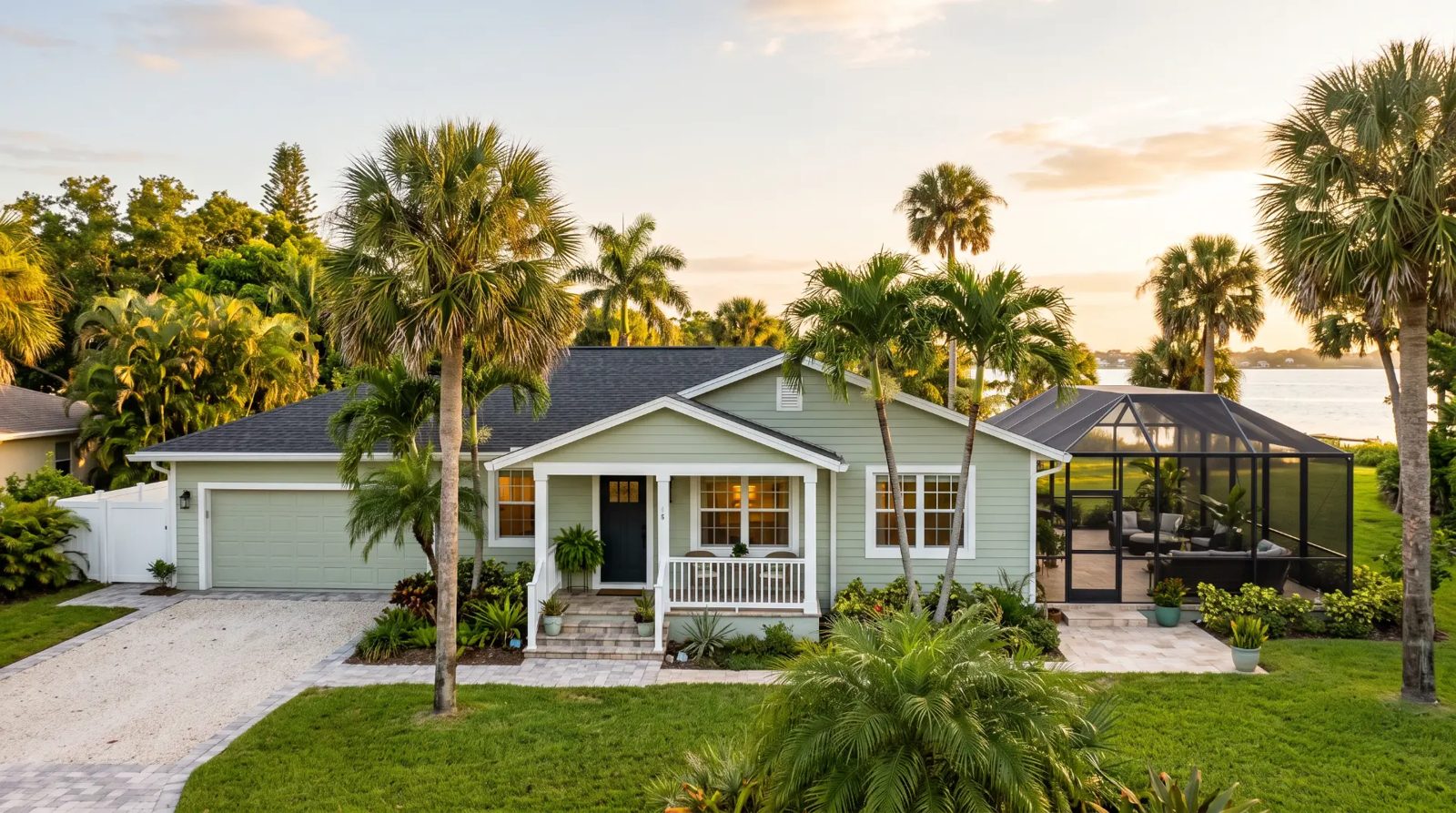
Dry to the touch is not cured
Waterborne paint dries in stages. First the water evaporates and the surface feels dry. Then the resin particles fuse together — coalescence — and only after that does the film reach its real hardness and block resistance. Humidity slows every stage.
That gap is where problems live. A wall that feels dry can still be soft enough to mark from tape, ladder contact or a second coat applied too early. Rushing the recoat traps moisture underneath and can produce a soft, blotchy or streaky finish.
Dew point, in plain terms
Dew point is the temperature at which air gives up its moisture as condensation. If the wall surface drops to within about 5°F of dew point, an invisible film of water forms on it. Paint applied onto that, or drying into it, does not form a proper film.
In Brevard this matters most in the evening. A west wall that was 95°F at 4 p.m. can radiate heat quickly after sunset while dew point stays in the mid-70s. That is why we stop applying exterior coats well before dusk in summer rather than squeezing in one more elevation.
What we actually do about it
Scheduling is the tool, not a special product.
- Start exteriors early, follow the shade, and stop with margin before the afternoon storm window
- Pressure wash a day ahead so walls are genuinely dry, not just surface-dry
- Extend recoat times instead of following the label's best-case number
- Check the forecast dew point, not just the chance of rain
- Run air movement and dehumidification indoors so interior coats set on schedule
Interiors in a Florida summer
Interior work is much less weather-dependent, which is why summer is a good time to do it. A conditioned house sits around 45–55% relative humidity, which is close to ideal for paint. The exceptions are rooms that fight the outdoors — a lanai conversion, a garage, a laundry room with poor ventilation, a bathroom used during the job.
Cabinet refinishing is the sensitive one. Sprayed finishes need clean air movement and stable humidity to level out and harden properly, so we control the environment in the work area rather than relying on the AC alone.
Epoxy floors and moisture in the slab
Garage floors add another moisture source: the slab itself. Florida slabs on grade push vapor upward, and epoxy applied over a wet slab can bubble or delaminate later. We grind rather than acid-etch, check the slab, and use a moisture-tolerant primer where conditions call for it. A freshly washed floor also needs real dry time — hours, not minutes.
Signs a job was rushed through humid weather
Brown or tan streaks running down a fresh exterior wall after a rain are surfactant leaching — water-soluble ingredients that were still in the film when moisture hit it. Uneven sheen, tacky trim weeks later, or a topcoat that peels away in a sheet when tape is removed all point the same direction: the coat did not get the conditions it needed.
None of these mean the paint was cheap. They usually mean the schedule ignored the weather.
Frequently asked questions
- How long does paint take to dry in Florida humidity?
- Interior coats in a conditioned home usually recoat on schedule, around two to four hours. Exterior coats in Brevard summer humidity often need six to eight hours or more before recoating, even though the surface feels dry much sooner.
- What humidity is too high to paint?
- Most exterior acrylics call for relative humidity below about 85%, with the surface at least 5°F above dew point. Above that, drying stalls and the finish can suffer.
- Can you paint the inside of a house in summer in Florida?
- Yes. A conditioned interior sits at a good humidity level year-round, which is why interior painting, cabinet refinishing and epoxy floors are ideal summer projects in Brevard County.
- What are the brown streaks on my newly painted exterior wall?
- That is surfactant leaching — water-soluble ingredients pulled to the surface when rain or heavy dew hit a coat that had not fully cured. It usually washes off, but it signals the coat was applied too close to moisture.