
How Salt Air Affects Paint on Merritt Island and Beachside Brevard Homes
Salt air shortens exterior paint life on Merritt Island and beachside Brevard homes to roughly four to six years. Airborne salt holds moisture against the wall, drives rust out of fasteners and metal, and accelerates chalking — so coastal repaints need a thorough salt wash, rust-inhibitive metal priming and coatings rated for marine exposure.
· 7 min read · Pro Touch Painting
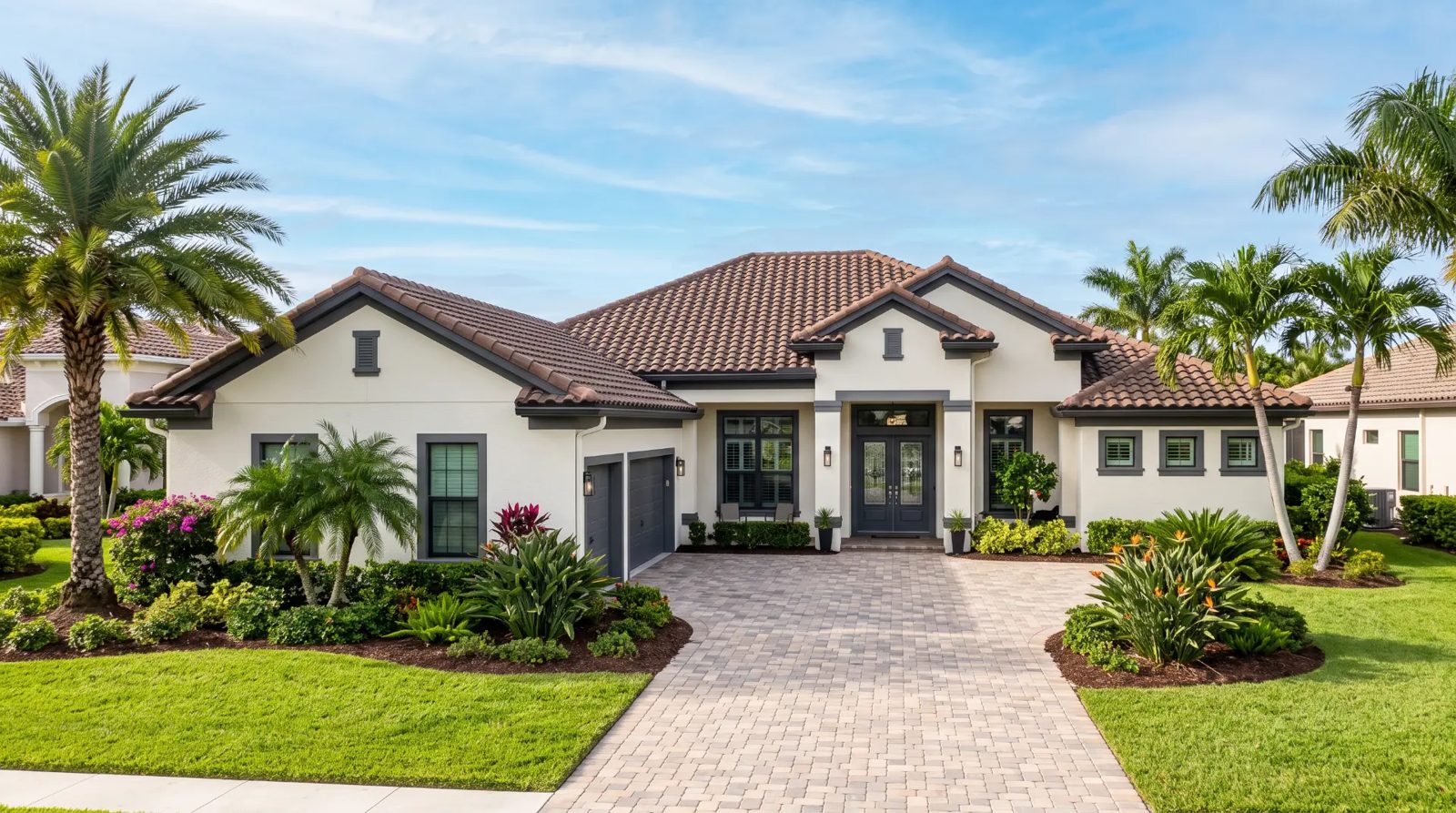
What salt actually does to a painted wall
Salt is hygroscopic: it pulls moisture out of the air and holds it. On a home between the Banana River and the Atlantic, a fine layer of salt settles on every wall, soffit, railing and light fixture. That layer keeps a thin film of moisture against the surface long after the sun has dried everything else.
Under paint, that constant moisture attacks adhesion from behind. On metal — nail heads, garage door panels, railings, hurricane shutters, AC stands — it starts corrosion, and the rust bleeds through as brown streaks. On stucco, it works with UV to break down the resin at the surface, which shows up as chalking: run a hand down a sun-faded south wall and it comes away powdery.
The Merritt Island situation specifically
Merritt Island sits between two bodies of water, so almost every home there gets some level of salt exposure — river side and ocean side both. Housing stock is largely 1960s–80s concrete block with stucco, plus a good number of canal-front homes with docks, seawalls and metal railings that take the worst of it.
The pattern we see repeatedly on the island: the north and east elevations still look acceptable, while the south and west walls are chalked, faded a full shade lighter and starting to lose film at the parapet or band. Painting only the bad walls is a false economy — the color match never holds and the untouched walls fail a year later.
Why a normal wash is not enough
A standard pressure wash removes dirt, mildew and loose chalk. Near the water you also have to remove salt, and salt is not dirt — it needs volume of clean water and dwell time, not just pressure. We wash coastal homes with a cleaning solution, rinse thoroughly, and let the wall dry fully before priming.
Skipping that step is the single most common reason a beachside repaint fails early. The new coat looks perfect on day one and starts blistering or losing adhesion within a couple of seasons, because it was applied over a salt layer.
The coating system we use on coastal Brevard homes
There is no single miracle product; it is a system, and each part has a job.
- Full clean and salt rinse, then complete dry time
- Masonry primer on chalking or bare stucco so the topcoat bonds to something sound
- Rust-inhibitive primer on every exposed metal component before it is coated
- Elastomeric or high-build coastal-rated acrylic on block and stucco, applied at spec film thickness
- Marine-grade or high-performance sealant at windows, doors and dissimilar-material joints
- Two full coats — never one heavy coat sprayed to look like two
What homeowners can do between repaints
Rinsing the exterior with fresh water two or three times a year makes a measurable difference on beachside homes, especially on the ocean-facing side and on metal. It is the same reason people rinse boats and cars.
Touch up rust spots as soon as they appear rather than waiting for the next full repaint. A rust streak that gets caught early is a spot-prime and a dab of paint; ignored for two years, it becomes pitted metal and a stained wall that needs a stain-blocking primer.
Realistic repaint intervals on the Space Coast
Inland Brevard — Viera, Suntree, West Melbourne, Rockledge — usually gets five to eight years from a quality exterior system. Merritt Island, Cocoa Beach, Satellite Beach, Indian Harbour Beach and Indialantic typically get four to six, and direct-oceanfront walls can be closer to three or four on the exposed elevation.
The point is not that coastal paint is doomed. It is that the prep and product decisions matter far more here than they would in Orlando, and a bid that skips the salt wash and the metal priming is not actually cheaper.
Frequently asked questions
- How long does exterior paint last on Merritt Island?
- Roughly four to six years for most Merritt Island homes with a quality coastal-rated system, and less on elevations that take direct salt spray. Inland Brevard homes typically get five to eight years.
- What kind of paint is best for a house near salt water in Florida?
- A high-build, coastal-rated 100% acrylic or elastomeric system over the correct primer — masonry primer on chalking stucco and rust-inhibitive primer on any exposed metal. Product choice matters less than the primer and prep beneath it.
- Why is my beachside house paint chalky?
- UV and salt break down the resin at the paint surface, leaving loose pigment behind. Chalk has to be washed off and the wall sealed with a masonry primer, or the next topcoat bonds to powder and peels.
- Do you paint homes on Merritt Island and the beaches?
- Yes. Pro Touch Painting works throughout Merritt Island, Cocoa Beach, Cape Canaveral, Satellite Beach, Indian Harbour Beach and Indialantic, with free written estimates.